Complications relating to enteral and parenteral nutrition in trauma patients: a retrospective study at a level one trauma centre in South Africa
Keywords:
complications, critical illness, nutrition, trauma, outcomeAbstract
Objectives: The aim of the study was to compare the incidence of complications in patients receiving enteral and parenteral nutrition (PN), and review how the early initiation of enteral feeding and early achievement of caloric goal would affect the incidence of complications. Design: The design was a retrospective audit of an ethics-approved prospective trauma registry and electronic medical record. Setting: The setting was a level one trauma centre intensive care unit. Subjects: One thousand and two consecutively treated patients were selected from 1 096 in the database. Outcome measures: Demographic data, nutrition, route of administration, time of initiation and complications in the form of sepsis, pneumonia and feed intolerance, were determined. Results: Patients receiving total PN (TPN) during their length of stay had a hazard ratio of 9.11 for the development of sepsis, compared to patients who were solely fed via the enteral route (p-value < 0.001). The patients who reached their nutritional goal late showed a hazard ratio of 2.67 for the development of sepsis, compared to patients who reached the goal early (p-value < 0.001). Patients with late initiation of feeding also had a greater risk of developing sepsis, with a hazard ratio of 2.41, compared to patients with early initiation (p-value < 0.001). Patients achieving the nutritional goal late had a 17.9% increased risk of developing pneumonia (p-value < 0.001). Conclusion: This study confirms previous findings that the use of TPN is a strong predictor of the development of sepsis, compared to enteral nutrition. Causality linkage should be made with caution owing to the study design.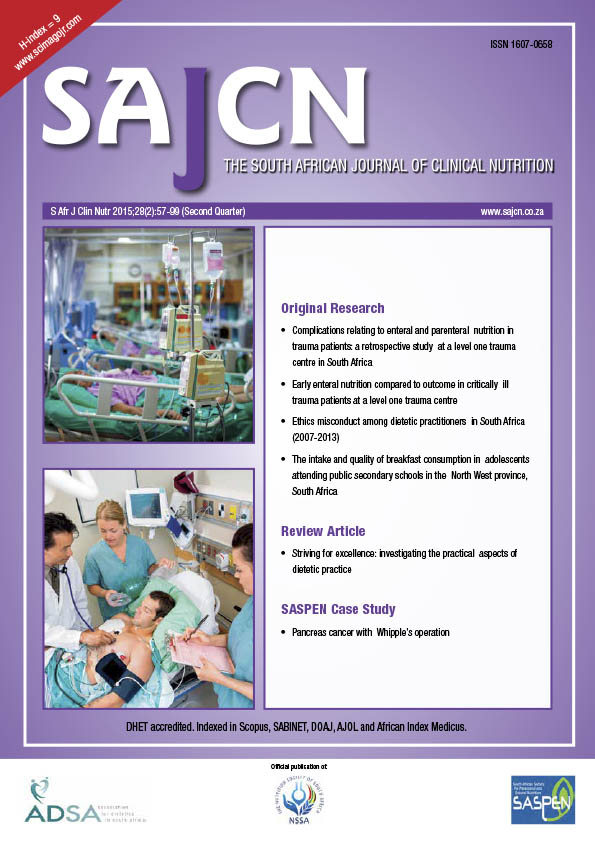
Downloads
Additional Files
Published
2015-02-28
Issue
Section
Original Research